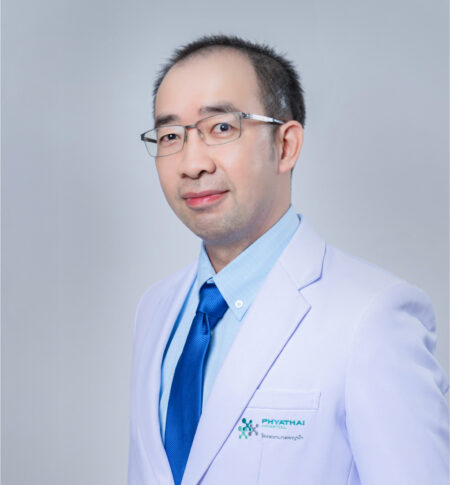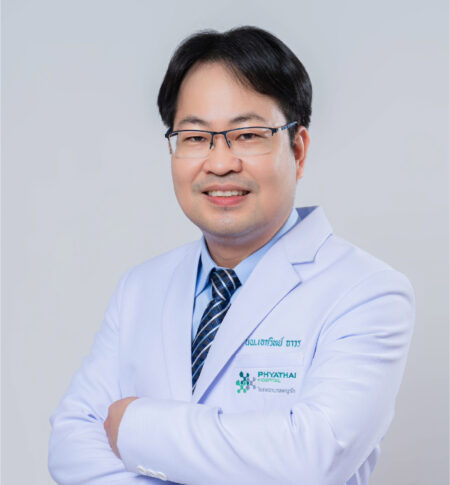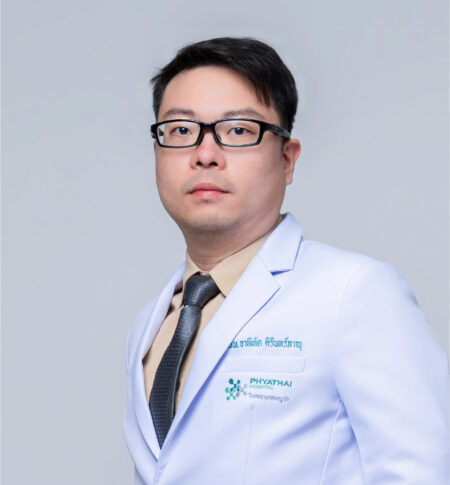

Dr. Arthithat Kirinpanu
We rely on our feet and ankles every day for walking and performing daily activities, yet their importance is often overlooked. It is only when one foot or leg is injured—even on just one side—that we realize how difficult it becomes to carry on with everyday life.
The Importance of Foot and Ankle Health in Daily Life
While an injury to one arm or hand may still allow us to function using the other, damage to a leg or foot can significantly limit our ability to carry out even the simplest daily activities. Our feet form the very foundation of movement—supporting walking, standing, and balance. When this function is compromised, everyday life can become extremely difficult.
For this reason, foot and ankle health is considered vital, and some physicians choose to dedicate their careers to this highly specialized field in order to help patients regain mobility and independence.
Education and Professional Expertise
Dr. Arthithat Kirinpanu earned his Doctor of Medicine degree from Chulalongkorn University. He then pursued advanced training in Orthopedic Surgery, with a particular focus on Foot and Ankle Disorders, at the Institute of Orthopedics, Lerdsin Hospital.
To further refine his expertise, he completed additional subspecialty training in Foot and Ankle Surgery at Phramongkutklao Hospital.
Currently, Dr. Arthithat serves as a specialized orthopedic surgeon focusing on foot and ankle conditions at Phyathai Sriracha Hospital, where he has been practicing for over six years.
Reflecting on his professional motivation, he shared:
“Personally, I enjoy treating conditions that are tangible and clearly defined. Orthopedic problems—especially those involving bones—allow us to see real, concrete results. For example, once a bone has fused properly, it can function almost exactly as it did before.
Treating foot and ankle conditions is like being a craftsman. It involves reconstructing, repairing, and problem-solving—much like assembling a complex puzzle. This field combines scientific knowledge with a sense of artistry, which I find both challenging and deeply rewarding.”
Multidisciplinary Care for Optimal Outcomes
Due to the high volume of patients treated each year, Phyathai Sriracha Hospital has developed multidisciplinary teams of specialists and subspecialists across various medical fields. In trauma cases, patients often present with injuries involving multiple body systems. The hospital’s ability to coordinate simultaneous care among specialists is one of its key strengths.
In the Musculoskeletal and Joint Disorders Department, patient care is further enhanced through efficient communication between physicians, nurses, and patients. Tools such as LINE messaging, appointment notification systems, and telemedicine services are used to improve accessibility and continuity of care.
For example, patients with chronic conditions such as gout may receive follow-up consultations via telemedicine, with medications delivered directly to their homes—reducing the need for frequent hospital visits.
Dr. Arthithat is widely recognized for both his clinical expertise and his compassionate approach to patient care.
“Doctors should care for patients as if they were family or close friends. The ethical principle of Do No Harm is fundamental—every treatment decision must aim to benefit the patient while minimizing risk.
I also encourage patients to be cautious in both their work and sports activities. Proper protective equipment should always be used. Even if an injury appears minor, it is important to seek medical evaluation. Many serious conditions—such as ligament tears—may not be visible externally and can only be detected through proper examination.”
Commitment to the Principle of Do No Harm
Over the past six years, Dr. Arthithat has treated a wide spectrum of foot and ankle conditions, ranging from routine cases to highly complex deformities. He shared a particularly memorable case:
“A patient in his early 50s came to me with severe foot deformities caused by an accident that had never been properly treated. Over the years, the condition worsened, leading to chronic pain and difficulty walking. Even visually, the deformity was obvious, and imaging studies confirmed the severity.
I explained to the patient very clearly that surgery carried significant risks. We discussed the benefits, limitations, and realistic expectations in detail. Ultimately, the patient chose surgery because without it, he would not have been able to walk properly or continue working.”
The procedure was complex and time-consuming, involving bone grafting from the hip to the foot and extensive structural reconstruction. Despite the challenges, the surgery was successful.
“The patient recovered well and is now able to walk normally and live a full, independent life. This case reminded me once again that in complex and high-risk situations, mutual understanding between doctor and patient is essential. When patients fully understand the process and trust their physician, it greatly contributes to a smooth recovery.”