Dr. Dulayanat Aranyapala
Endoscopic Facelift and Advanced Breast Augmentation Techniques
Today, endoscopic facelift techniques are widely used to elevate facial tissues that adhere to the underlying bone and reposition them posteriorly, resulting in a firmer, more youthful forehead. This technique requires only small incisions and allows surgeons to clearly visualize nerves and surrounding structures during the procedure, significantly reducing the risk of complications. Additional benefits include a naturally elevated brow position and a more open, youthful appearance of the eyes.
In breast augmentation surgery, the use of endoscopic or laparoscopic cameras has greatly improved surgical precision. These cameras allow surgeons to clearly visualize the muscle dissection area, minimizing unnecessary tissue trauma, reducing the risk of nerve injury that may cause nipple numbness, and decreasing postoperative bleeding.
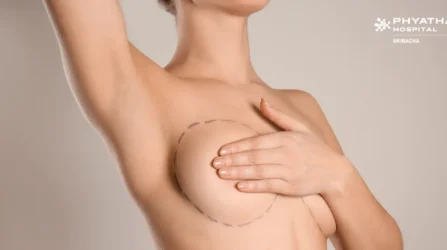
However, when larger silicone implants are desired, an incision beneath the inframammary fold may be more appropriate. This approach allows for a wider incision, enabling safe implant insertion without compromising implant integrity. At Phyathai Sriracha Hospital, silicone implants are typically inserted using this technique, with incision lengths ranging from 2.9 to 3.5 cm, depending on implant size.Regarding implant placement, the Dual Plane technique—in which the implant is positioned beneath the pectoral muscle in the upper breast and beneath the breast gland in the lower portion—has been shown to reduce the risk of capsular contracture while producing a more natural breast contour.
Because breast augmentation involves multiple surgical options, shared decision-making between the surgeon and the patient is essential. Each consultation with Dr. Dulayanat Aranyapala (Dr. Ping) typically lasts 45–50 minutes to ensure that the surgical plan aligns with the patient’s anatomy, expectations, and desired outcomes.
Education and Advanced Training
Dr. Dulayanat graduated with her medical degree from Ramathibodi Hospital in 2005. She completed her general surgery residency at Songklanagarind Hospital and further specialized in Facial Plastic and Reconstructive Surgery at Siriraj Hospital.
She later received a scholarship from Phyathai Sriracha Hospital to pursue advanced training in endoscopic facelift and breast augmentation surgery in Seoul, South Korea. Dr. Dulayanat spent one year training with renowned plastic surgeon Dr. Hong Ki Lee at Image Plastic Surgery Clinic, where she assisted in numerous facial plastic and breast augmentation procedures.
From Korea to Thailand: Comprehensive Plastic Surgery Care
After completing her advanced training in Korea, Dr. Dulayanat joined the Plastic and Cosmetic Surgery Center at Phyathai Sriracha Hospital. Her scope of practice includes reconstructive surgery for facial bone fractures caused by accidents, microsurgery such as finger or organ reattachment, and a wide range of cosmetic augmentation procedures.
She has also developed and refined patient care systems within the cosmetic surgery unit to ensure the highest standards of aesthetic outcomes, safety, and efficiency.
Dr. Dulayanat has performed over 1,000 cosmetic surgery cases. With meticulous preoperative planning and standardized surgical protocols, most procedures are completed within 40 minutes, resulting in minimal complications and rapid recovery.
Evolution of Breast Augmentation Surgery
In the past, breast augmentation relied on open incisions beneath the breast fold, with limited visibility during pocket creation. This increased the risk of tissue injury and complications.
With the introduction of endoscopic-assisted breast augmentation, the focus shifted from merely reducing incision size to achieving maximum surgical visibility and precision. Surgeons can now operate with greater accuracy, leading to less bleeding, reduced bruising, and faster recovery.
Although larger implants may require wider inframammary incisions, modern techniques ensure that scars are concealed within the natural breast crease, making them nearly invisible when standing normally. Patients can confidently wear swimsuits and sleeveless clothing.
Postoperatively, Phyathai Sriracha Hospital provides a structured Scar Care Program, including step-by-step guidance to reduce swelling and promote healing. With proper care, most scars fade significantly within six months.
Cosmetic Surgery and Patient-Centered Care
Approximately 60–70% of Dr. Dulayanat’s patients seek cosmetic surgery, while she continues to prioritize urgent surgical care for accident victims.
“Helping patients regain function—whether by reattaching a finger or repairing a fractured limb—is deeply fulfilling. Seeing patients return to their daily lives with restored function brings true pride to our profession.”
Effective communication is a cornerstone of her practice. Patients can easily reach the medical team through platforms such as LINE or Messenger, ensuring prompt guidance on postoperative care. This close follow-up enhances recovery outcomes and reassures patients that they are well supported.
Restoring Function and Enhancing Confidence
For patients with congenital conditions, severe injuries, or traumatic defects, Dr. Dulayanat’s primary goal is to restore normal anatomy and function as much as possible. For cosmetic surgery patients, the focus shifts toward enhancing self-confidence and self-esteem.
“Patients who seek aesthetic surgery often want to improve aspects of themselves that cause insecurity. When surgery helps them feel confident and proud of their appearance, it allows them to love themselves more and live more happily.”
Cosmetic surgery today is widely accepted as a means of self-improvement. Dr. Dulayanat offers the following advice before undergoing any procedure:
Know your surgeon: Verify credentials and specialization through the Medical Council.
Choose a reputable hospital: Ensure high standards, safety, and credibility.
Consult thoroughly: Discuss suitability, risks, costs, and expectations openly with your surgeon. Never hesitate to ask questions before making a decision.