For further information or Booking..


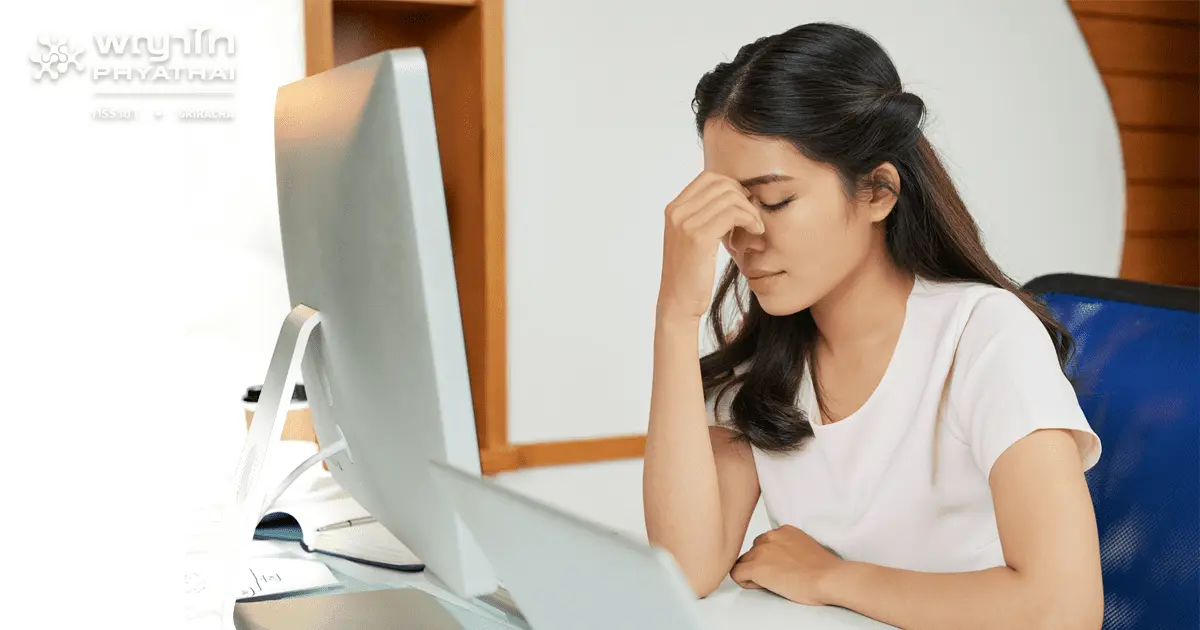
Our eyes endure significant strain throughout the day—especially for office workers who spend long hours in front of computer screens. Aside from sunlight and the blue light emitted from digital devices, many everyday habits can unknowingly harm our eyes.
1. Screen Addiction
According to data from the Electronic Transactions Development Agency (ETDA) in 2014, Thais spend an average of 7.2 hours per day—nearly one-third of the day—looking at electronic screens. Prolonged exposure to screen glare affects the eye lenses and optic nerves and can lead to Computer Vision Syndrome (CVS).
How to reduce the risk:
-
Choose high-resolution screens to minimize eye strain
-
Maintain a distance of 20–28 inches between your eyes and the screen
-
Adjust screen brightness to a comfortable level
-
Follow the 20-20-20 rule: every 20 minutes, look 20 feet away for 20 seconds
-
Blink frequently to maintain moisture
-
Adjust posture regularly to relax the body and eyes
-
Consider using computer glasses
2. Insufficient Water Intake and Unhealthy Eating
Our bodies are about 70% water, so drinking at least eight glasses a day is essential. Dehydration directly reduces eye moisture and can cause dry eyes, redness, and swollen eyelids.
Poor nutrition—especially low intake of fruits and vegetables—can lead to deficiencies in essential nutrients needed for eye repair and maintenance.
3. Heavy Drinking and Smoking
Beyond their well-known effects on the liver, digestive system, and respiratory system, smoking also harms eye health. Studies show that smoking increases the risk of:
-
Cataracts
-
Optic nerve damage
-
Conjunctivitis
-
Dry eyes
-
Diabetic eye diseases
Alcohol consumption may further contribute to dehydration, worsening dry eye symptoms.
4. Not Wearing Sunglasses and Exposing Eyes to UV Radiation
Thailand’s sunlight is extremely intense. Walking or driving in direct sunlight without sunglasses exposes the eyes to harmful UV rays, which can lead to corneal and conjunctival inflammation.
Protective tips:
-
Wear sunglasses that block UV-A and UV-B rays
-
For general use, gray or brown-tinted lenses work best
-
Use sunglasses when outdoors, especially in dusty or smoky environments
5. Never Getting an Eye Check-up — Risking Blindness Without Realizing It
Annual eye examinations—or as recommended by your ophthalmologist—are crucial. They help detect early signs of eye diseases that may cause blindness before symptoms appear.
Conditions such as acute glaucoma attacks can lead to sudden vision loss. Early detection provides more treatment options and helps preserve your vision for the long term.
For further information or Booking..

 Building A, 3rd floor