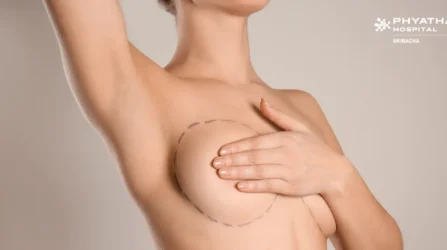
Women with abnormally large breasts often experience physical discomfort and limitations in daily life due to the excessive weight of the breasts. Common symptoms include neck pain, back pain, and shoulder pain caused by bra straps bearing excessive weight and compressing the shoulders.
Some patients may also experience numbness or tingling in the hands, which occurs when the heavy breast weight pulls on the chest muscles and compresses nearby nerves.
Maintaining proper hygiene can be difficult, particularly in the inframammary fold (the area beneath the breast crease). Persistent moisture in this area may lead to skin irritation, rashes, or infections.
These issues can be effectively treated with breast reduction surgery (reduction mammoplasty). In general, women who seek breast reduction surgery can be classified into two main groups.
Types of Breast Conditions Requiring Reduction
1. Large Breasts with Predominantly Glandular Tissue
The breasts are large but firm, well-shaped, and not significantly sagging. The skin remains relatively tight, and this condition is commonly seen in adolescents or young women.
2. Large Breasts with Sagging and Loss of Firmness
The breast tissue is soft, loose, and drooping. This condition often develops with aging or after multiple pregnancies, resulting in enlarged breasts with significant ptosis (sagging).
Breast Reduction Surgery Techniques
Periareolar Incision Technique
This technique involves an incision made around the areola. The surgical scar is concealed by the darker pigmentation of the areola, making it less noticeable. Excess skin and breast glandular tissue are removed through this incision.
Temporary wrinkling around the areola may occur after surgery; however, this typically improves and becomes smoother within 6 months to 1 year. This method is effective for reducing large and sagging breasts, and breastfeeding is usually still possible after surgery.
Vertical (Straight-Line) Incision Technique
This method begins with an incision around the areola, followed by a vertical incision extending downward beneath the nipple. Excess breast tissue is removed, the nipple is repositioned to a higher level, and the entire breast is lifted and reshaped.
This technique effectively reduces excess skin in the lower breast area, corrects breast sagging, and is suitable for a wide range of breast sizes. Nipple sensation and the ability to breastfeed are generally preserved.
Extended Vertical (Inverted “O” / Lollipop) Incision Technique
This technique extends the vertical incision further beneath the areola, allowing for the removal of a larger volume of breast tissue. It also enables significant elevation of a severely drooping nipple.
This method is ideal for patients with very large and severely sagging breasts and provides excellent results when substantial breast reduction is required.
Inframammary Fold Incision Technique
In this approach, the incision is made along the inframammary fold beneath the breast, without an incision around the areola. The surgical scar is hidden under the breast crease.
This technique is suitable for moderately large breasts and for correcting breast asymmetry. Advantages include improved surgical visibility and a shorter operative time.
Preoperative Preparation for Breast Reduction Surgery
-
Undergo a complete physical examination, including breast evaluation to rule out abnormalities
-
The surgeon will measure and mark key anatomical points on the breasts prior to surgery
-
Discontinue anti-inflammatory and pain-relief medications as advised before surgery
-
Consult with the surgeon to determine the appropriate amount of breast tissue to be removed
-
Refrain from food and water before surgery, as instructed by the medical team
-
Prepare a supportive bra approximately one size smaller than your current size
-
Patients with high blood pressure should ensure blood pressure is well controlled (below 140/90 mmHg), as surgery involves some blood loss
Surgical Procedure for Breast Reduction and Breast Lift
-
Breast measurements are taken while the patient is standing, and the amount of tissue to be removed is determined prior to surgery
-
Patients must fast before surgery due to the use of general anesthesia
-
The procedure involves removing excess skin and breast tissue, repositioning the nipple to a higher and more natural position, and closing the incisions
-
If liposuction is required, a small incision (approximately 1 cm) may be made beneath the breast or in the underarm area to remove excess fat before closing the wound
Postoperative Care After Breast Reduction Surgery
- After surgery, patients may need to stay in the hospital for observation depending on individual recovery and the surgeon’s assessment. Surgical drains may be placed temporarily, and mild bleeding or fluid leakage from the incision site may occur. Cold compresses are generally not required unless advised by the surgeon.
- The incision area should be kept clean and dry. Patients should avoid getting the surgical wounds wet until permitted by the doctor. Follow-up appointments will be scheduled to monitor healing progress and determine the appropriate time for suture removal.
- Adequate rest is strongly recommended. Excessive walking, heavy lifting, or strenuous activities during the early recovery period may increase the risk of wound inflammation. All prescribed medications should be taken strictly as directed.
- If there are concerns about scar appearance, silicone scar sheets may be used after suture removal and once the wounds have healed adequately.
- Patients are advised to avoid spicy foods, fermented foods, alcoholic beverages, and smoking during the recovery period, as these may interfere with wound healing.
- Normal daily activities may be gradually resumed based on comfort level and the surgeon’s recommendations.
- Patients should seek medical attention promptly if abnormal symptoms occur, such as wound separation, infection, excessive swelling, redness, high fever, severe pain, or abnormal discharge from the surgical site.
- Wearing a supportive bra as recommended by the surgeon is essential to maintain breast shape and prevent recurrent sagging. Breast size may increase again with weight gain due to fat accumulation within the breast tissue.

 Building A, 1st floor