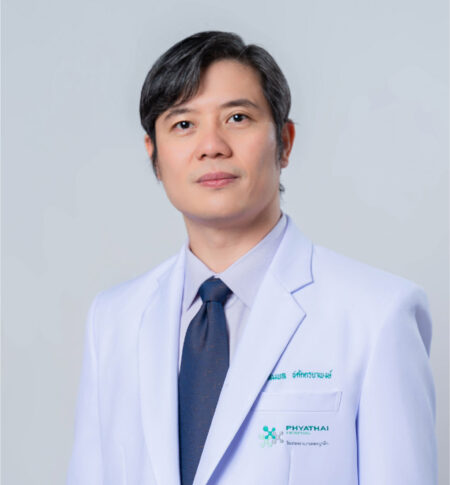
Dr. Sippanont Samchai
After earning his Doctor of Medicine degree from Thammasat University in 2000 (B.E. 2543), Dr. Sippanont Samchai began his career as a practicing physician and received a scholarship to pursue further training. He subsequently completed his specialization in Neurology at Phramongkutklao Hospital, before joining Phyathai Sriracha Hospital as a neurologist. Dr. Sippanont later undertook advanced training in Epilepsy and Sleep Medicine. He currently practices as an expert neurologist with a subspecialty focus on epilepsy and sleep-related disorders. Reflecting on his motivation and professional journey, Dr. Sippanont shared:
Specializing in Epilepsy and Sleep Medicine
“I chose to further specialize in epilepsy and sleep medicine because I recognized that patients with neurological conditions require highly specialized care, yet there are relatively few physicians in these fields. At the same time, the number of patients continues to increase.
I wanted to help patients suffering from epilepsy, sleep disorders, Parkinson’s disease, dementia, headaches, and stroke—conditions that are all closely related to the nervous system and the brain.”
Understanding and Treating Epilepsy
Epilepsy is a condition that requires time, understanding, and continuous care. It can arise from many causes, including congenital abnormalities, cerebrovascular diseases such as cerebral infarction or hemorrhage, brain tumors, head injuries, and external factors such as alcohol consumption, substance abuse, or exposure to certain neurostimulants.
Most of Dr. Sippanont’s patients present either in emergency situations or for regular follow-up care, as epilepsy is often a chronic condition that requires long-term medication and monitoring.
“Many patients believe epilepsy cannot be treated, which may cause them to lose hope or neglect medical advice. As a physician, I always explain that there is hope in every treatment.
Epilepsy management involves regular evaluation and adjustment of medications based on symptoms. While it may not always be completely curable, proper treatment can significantly improve quality of life and allow patients to live safely and normally.”
Diagnosis and Treatment of Sleep Disorders
Sleep-related disorders are increasingly common, particularly among individuals who are overweight, obese, or have underlying conditions such as high blood pressure or diabetes. Persistent daytime fatigue, dizziness, headaches, or poor response to treatment for chronic illnesses may indicate an underlying sleep disorder.
If left untreated, these conditions may progress to severe sleep apnea, which can negatively affect cardiovascular and neurological health.
“Many sleep disorders occur during sleep and may go unnoticed. Warning signs include sleepwalking, excessive movement during sleep, restlessness, loud snoring, or pauses in breathing.
Other symptoms such as frequent morning headaches, persistent daytime sleepiness, or sudden awakenings at night should not be ignored. Anyone experiencing these signs should seek medical evaluation.”
Comprehensive Sleep Medicine Care
Sleep medicine is a broad field. Dr. Sippanont treats a wide range of sleep-related conditions, including sleep apnea, insomnia, sleep-related seizures, abnormal movements during sleep, and REM sleep behavior disorder.
Initial evaluation typically includes detailed history-taking, assessment, and sleep studies, followed by lifestyle modification advice. Some patients may require breathing support devices during sleep. In cases involving seizures or abnormal sleep behaviors, treatment often focuses on medication and behavioral guidance.
Long-Term Care in Neurological Disorders
As a neurologist, Dr. Sippanont emphasizes the importance of continuous, long-term care for patients with neurological conditions. These diseases often require ongoing monitoring, empathy, and patient-centered management. Physicians must stay current with medical research and advancements to ensure accurate diagnosis and effective treatment.
“Neurological diseases rely heavily on medical technology. At Phyathai Sriracha Hospital, we are fully equipped with advanced diagnostic tools, including CT scans, MRI, electroencephalography (EEG) for epilepsy, and comprehensive sleep monitoring systems that record brain waves, heart rate, and breathing patterns during sleep.”
Raising Awareness of Sleep-Related Disorders
While many people are aware of conditions such as stroke, transient ischemic attack (TIA), and epilepsy, fewer recognize the serious health risks associated with untreated sleep disorders. Poor sleep quality can significantly impact brain function, cardiovascular health, and overall quality of life.
“If you or someone close to you experiences abnormal sleep symptoms, excessive daytime fatigue, or neurological warning signs, seeking medical evaluation early can prevent serious long-term complications.”