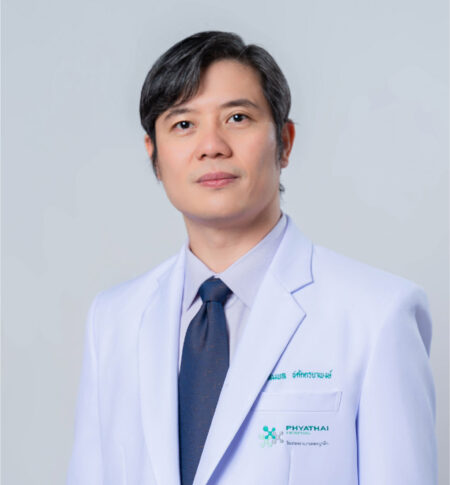
Dr. Panthanit Traithaned
Patients under the care of Dr. Panthanit Traithaned present with diverse clinical profiles. Among those seeking treatment for headaches and dizziness, the majority are working-age adults, typically between 25 and 50 years old. In contrast, patients diagnosed with cerebrovascular diseases or stroke are most commonly in the 60–70 age group and often have underlying medical conditions. Notably, there is a growing trend of cerebrovascular disorders being identified in younger populations.
After earning her medical degree from the Faculty of Medicine at Prince of Songkla University and serving as a physician in Pattani Province, Dr. Panthanit Traithaned pursued specialized training in neurology at Chulalongkorn University in 2012. Reflecting on her journey, she shared the inspiration behind her decision:
“I chose to pursue further studies in neurology because I find the brain and nervous system truly fascinating. The brain functions as the body’s control center, regulating countless vital processes. Neurological diseases are often complex and challenging to diagnose and treat—whether they involve headaches, dizziness, or other symptoms. The difficulty increases when patients experience chronic, persistent symptoms that do not respond to medication. In such cases, identifying the underlying cause, particularly conditions related to cerebral blood vessels that may lead to stroke, requires careful and thorough evaluation. Prompt and accurate diagnosis, followed by timely treatment, is essential to preserve brain function and ensure the best possible quality of life for patients.”
Diverse Patient Profiles in Neurological Care
As a specialist in neurological and nervous system disorders, Dr. Panthanit cares for patients with a wide range of conditions. Those seeking treatment for headaches and dizziness are most commonly working-age adults, typically between 25 and 50 years old. In contrast, patients diagnosed with cerebrovascular diseases or stroke are usually in the 60–70 age group and often have underlying health conditions. Notably, however, there is a growing trend of these conditions being detected in younger individuals.
“Because the brain is enclosed within the skull, it cannot be directly observed or examined with the naked eye. A detailed medical history is therefore critical—such as when symptoms first appeared and what the patient experienced before and after the onset of illness. This information helps physicians determine the possible disease, its location, and the most appropriate diagnostic tests. Medical history and physical examination findings are analyzed together to guide diagnosis and, when necessary, to confirm it through additional investigations.”
Rapid Diagnosis Supported by Advanced Technology
Timely diagnosis is particularly crucial in neurological and brain-related diseases. When preliminary examinations indicate the need for further investigation, Dr. Panthanit can promptly order advanced diagnostic tests. These include Computed Tomography (CT) scans and Magnetic Resonance Imaging (MRI), both of which have advanced significantly and allow physicians to visualize detailed brain structures, detect abnormalities, and identify areas requiring urgent intervention.
In addition to neurologists, comprehensive patient care is supported by multidisciplinary teams within the hospital, including radiologic technologists, nurses, and physiotherapists, all of whom contribute to effective diagnosis, treatment, and rehabilitation.
“Paying close attention to a patient’s medical history, combined with clinical expertise and experience, is especially critical in cases involving cerebral blood vessels. If severe symptoms are left untreated for more than 4.5 hours after onset, the risk of cerebral infarction or even death increases significantly. Rapid diagnosis and coordinated teamwork within the hospital greatly enhance treatment effectiveness, allowing patients to receive appropriate medication or interventions as quickly as possible—even when the 4.5-hour window has passed.”
Prevention and Early Medical Attention Are Key
Dr. Panthanit emphasizes the importance of seeking medical attention promptly when abnormal symptoms occur. For generally healthy individuals, she recommends maintaining a balanced diet that includes all five major food groups and engaging in regular physical activity for at least 150 minutes per week. Adults aged 35 and older should undergo annual health check-ups.
“Cerebrovascular diseases often develop silently, without warning signs. When symptoms do appear, the disease has already progressed. Regular health screenings are therefore the best way to reduce the risk—by monitoring blood pressure, cholesterol levels, and blood sugar. Obesity is another significant risk factor, and smoking should be avoided or discontinued, as it substantially increases the risk of cerebrovascular disease.”
For individuals who are already experiencing symptoms, immediate hospital evaluation is essential. The most critical factor in successful treatment is time. The sooner a patient receives medical care, the more effective and straightforward the treatment process becomes, as interventions can be administered promptly and appropriately according to the stage of the disease.