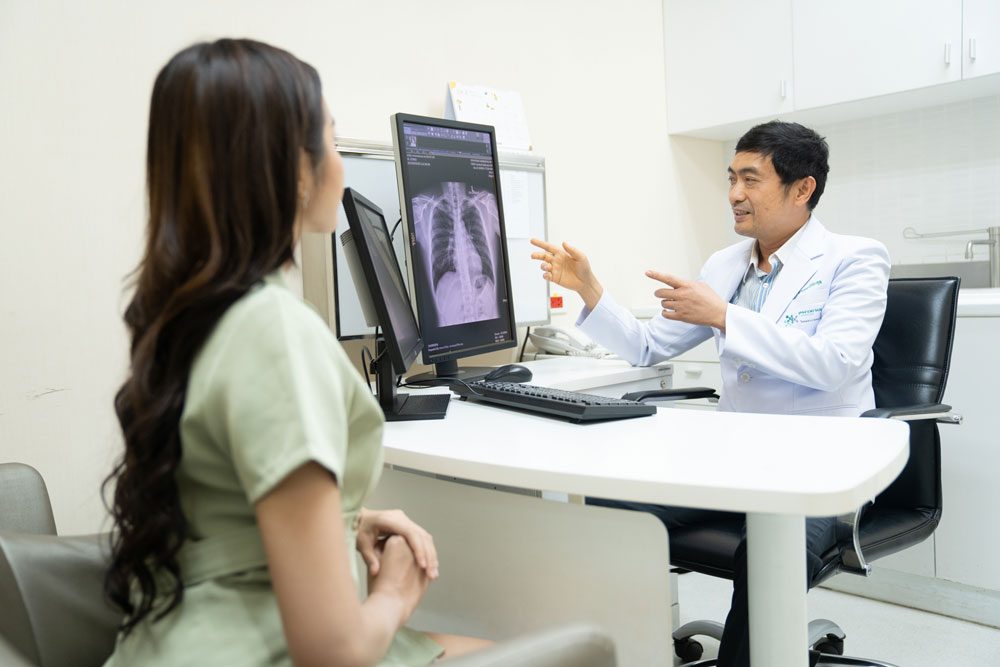
Dr. Manoch Panthongwiriyakul
Being a surgeon carries a unique responsibility, as many patients present with severe and life-threatening conditions. When we are able to help critically ill patients survive and return to a normal life—or at least regain a quality of life close to what they once had—it brings us great pride and fulfillment, especially when we see patients and their families smiling once again.
Commitment and Expertise in General Surgery
After earning his Doctor of Medicine degree from the Faculty of Medicine, Siriraj Hospital, Mahidol University, Dr. Manoch Phantongwiriyakul pursued advanced training in General Surgery at Phrapokklao Hospital, Chanthaburi Province. He currently serves as a General Surgeon at Phyathai Sriracha Hospital. Reflecting on his inspiration and training, Dr. Manoch shared:
“During medical school, students have the opportunity to rotate through various departments. I found myself particularly drawn to surgery, especially when I had the chance to assist in real surgical procedures. I realized that I was comfortable handling surgical instruments, understood the complexity of operative work, and had the confidence required for this field. Most importantly, I felt a great sense of fulfillment in treating conditions with clear surgical solutions. From that moment on, I had no hesitation in pursuing surgery as my specialty.”
Scope of Practice and Patient Care
As a general surgeon, Dr. Manoch has extensive experience managing a wide range of conditions and performing both open and minimally invasive surgeries.
“Currently, approximately 60% of my patients are accident victims, while the remaining 40% require general surgical treatment. These include conditions such as appendicitis, gallbladder inflammation, and cases involving multiple medical problems that require surgical intervention. As a surgeon, it is my responsibility to provide appropriate and timely treatment in all of these situations.”
One of the most important aspects of surgical care, Dr. Manoch emphasizes, is addressing patients’ concerns and their desire for a successful outcome without the need for repeated operations.
“This is a critical part of a surgeon’s role. Each operation must be carefully planned to achieve the best possible result in a single procedure—especially in patients with multiple coexisting conditions. Surgeons must prioritize problems appropriately and ensure that both the medical team and the patient are fully prepared before surgery.”
Managing Severe Trauma and Complex Cases
Due to its location near major roads and industrial zones, Phyathai Sriracha Hospital frequently receives patients with severe traumatic injuries. In many cases, multiple organs may be injured at the same time, requiring staged or multiple surgical procedures to ensure patient safety.
“Some patients require hospitalization for several months following severe accidents. However, we work as a multidisciplinary team with expertise across nearly all medical specialties. This collaborative approach allows patients to gradually recover or significantly improve, even when treatment and rehabilitation take a long time. Ultimately, every physician shares the same goal—to help patients regain the best possible quality of life.”
Advanced Technology for Safer and More Precise Surgery
In addition to standard diagnostic tools, the hospital is equipped with advanced medical technologies that support accurate diagnosis and effective treatment planning. These include Computed Tomography (CT) scans, Ultrasound, Magnetic Resonance Imaging (MRI), and fully equipped operating rooms with endoscopic surgical systems.
“Having advanced medical equipment is extremely important. In the past, when diagnosis relied mainly on basic X-rays, it was sometimes difficult to determine whether surgery was necessary or which area should be operated on. Today, modern imaging allows us to make precise diagnoses, identify the exact location of disease or injury, and decide on the most appropriate surgical approach.
Endoscopic cameras and multidisciplinary collaboration enable thorough analysis and planning before surgery. This preparation significantly reduces the risk of complications and improves surgical outcomes. These technologies not only enhance accuracy but also make treatment safer and more efficient for patients.”