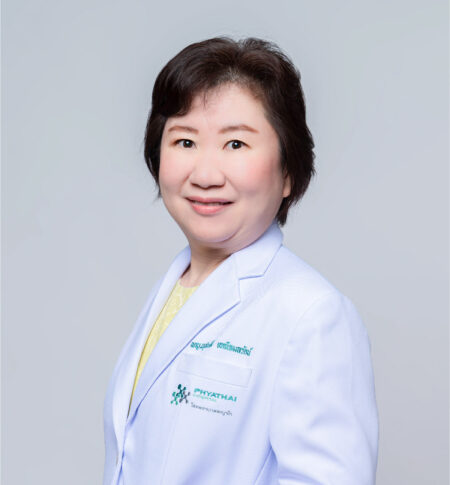
Dr. Dabuswinee Sukkhojaiwaratkul
Dr. Dabuswinee Sukkhojaiwaratkul graduated with First Class Honors from the Faculty of Medicine, Ramathibodi Hospital, Mahidol University. She completed advanced training in Pediatrics and obtained subspecialty certification in Pediatric Endocrinology and Metabolism. She currently specializes in pediatric hormonal disorders, diabetes, obesity, and adolescent medicine, and shared her inspiration during her studies.
A Passion for Pediatric Endocrinology and Child Development
“At heart, I have always loved children and enjoyed being around them. Even as a first-year medical student, I was determined to pursue a career in pediatrics. As I continued my training, I developed a strong interest in Pediatric Endocrinology and Metabolism.
Although endocrine disorders in children are not very common, they are often complex and challenging to treat. Despite this, I chose to continue my studies in this field. Today, I take great pride in caring for children with endocrine and metabolic conditions, while also providing general pediatric care when needed.”
Common Conditions in Pediatric Endocrinology
Dr. Dabuswinee frequently treats children with a wide range of endocrine and growth-related disorders, including:
“Most of the conditions I see involve hormonal abnormalities, such as thyroid disorders and diabetes. I also commonly care for children with growth and developmental issues, including precocious puberty, unusually short or tall stature, and childhood obesity.”
The Importance of Early Detection in Precocious Puberty
When asked about the importance of early medical consultation for children showing signs of precocious puberty, Dr. Dabuswinee emphasized the critical role of parental awareness:
“Today, many parents are well-informed and attentive to their children’s development. They may notice unusual changes on their own or through information found online or discussions with other parents.
If parents observe anything concerning, it is important to consult a doctor promptly. Even if the evaluation turns out to be normal, early assessment is always beneficial. When abnormalities are detected early, treatment outcomes are often much better.”
Commitment to Children’s Well-Being
Dr. Dabuswinee concluded by expressing her dedication to pediatric care:
“My passion for working with children has only grown stronger over time. It brings me great happiness to support their health and to watch them grow and develop in a healthy and appropriate way.”
Monitoring Growth from Vaccination Visits
Dr. Dabuswinee carefully observes children’s growth patterns during routine visits, including vaccination appointments. She assesses whether a child’s height, weight, and development fall within normal ranges and looks for early signs of endocrine disorders.
She pays close attention to:
Delayed or accelerated growth
Early breast development in girls (especially before age 8)
Rapid height increase suggestive of early puberty
Excessive weight gain indicating obesity
“Many endocrine conditions can be detected early during routine visits. Even vaccination appointments provide valuable opportunities to monitor a child’s growth and development.”
Individualized Treatment and Long-Term Follow-Up
“As a general pediatrician, I care for children from birth up to 15 years of age. However, as a pediatric endocrinologist, I continue monitoring growth and development until around 18 years of age.”
Treatment varies depending on the condition:
Growth disorders: Hormone therapy may be used to help children achieve height appropriate to their genetic potential
Diabetes:
Type 1 diabetes requires insulin injections
Type 2 diabetes, often associated with obesity, is usually managed with oral medication and lifestyle modification
Thyroid disorders: Primarily treated with medication; some conditions require lifelong management
Surgical cases: Referred to pediatric surgeons when necessary
Supporting Adolescents Through Growth and Self-Image
Dr. Dabuswinee emphasizes involving adolescents in their own care:
“During puberty, many children become concerned about their height, body shape, or weight. When they understand the importance of their health and appearance, they are often more cooperative with treatment.”
Examples include:
Adolescents with obesity or diabetes actively participating in weight control and dietary changes
Children concerned about short stature following nutritional and lifestyle guidance
The clinic is equipped with a Harpenden Stadiometer, a standardized height-measuring device used specifically in endocrine clinics, along with comprehensive laboratory facilities for blood and hormone testing.
Continuous Learning and Shared Decision-Making
Dr. Dabuswinee remains committed to staying current with medical research and advances. She works closely with both parents and teenage patients, ensuring that everyone understands the condition and treatment options.
“I believe it is important for adolescents to be involved in treatment decisions. I provide clear and complete information so that families can choose the most appropriate care together.”
She offers this advice to parents:
“Parents should carefully observe their children’s growth and development. Girls should not develop breasts before the age of eight. Rapid or unusually early growth—although it may seem positive—can actually indicate early puberty in both boys and girls.
Early menstruation is not ideal for girls, and early evaluation is important. If you have concerns, you are always welcome to contact the hospital for further consultation.”