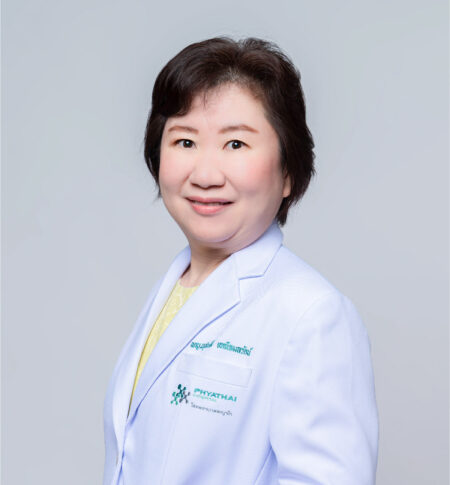

Dr. Nanthawan Khusuwan
The doctor integrates medical science with the art of communication to help children understand their condition, feel comfortable and familiar, overcome fear, and learn how to prepare themselves for treatment.
Integrating Medical Expertise with Compassionate Communication
Dr. Nanthawan Khusuwan believes in combining medical science with the art of communication to help children understand their condition, feel comfortable and familiar with their surroundings, overcome fear, and prepare themselves confidently for treatment.
After earning her Doctor of Medicine degree from the Faculty of Medicine, Chiang Mai University, Dr. Nanthawan continued her training in Pediatrics at the same institution. Following two years of clinical practice as a pediatrician, she pursued further subspecialty training in Pediatric Nephrology at Phramongkutklao Hospital.
She currently serves as both a general pediatrician, caring for common childhood illnesses, and a pediatric nephrologist, specializing in kidney diseases in children. Reflecting on her journey, she shared:
“I was initially drawn to pediatrics because caring for children brings genuine happiness. Children are honest and expressive—when they are unwell, they show it clearly, and when they recover, their joy is unmistakable. That sense of recovery gives me great pride and fulfillment.”
A Focus on Pediatric Kidney Diseases
As she progressed in her pediatric career, Dr. Nanthawan developed a strong interest in kidney diseases in children, recognizing that many conditions can be treated effectively if diagnosed early.
“Some pediatric kidney diseases respond very well to timely diagnosis and appropriate treatment. That motivated me to further specialize in this field.”
Kidney diseases in children can occur at any age, from newborns to adolescents. Dr. Nanthawan cares for a wide spectrum of patients, including:
-
Newborns, in whom kidney abnormalities may be detected through prenatal ultrasound and followed up after birth
-
Infants and older children, who may present with symptoms such as urinary tract infections, generalized swelling, foamy urine, blood in the urine, headaches, or high blood pressure
Her diagnostic approach includes careful history-taking and investigations such as blood tests, urine analysis, electrolyte studies, and kidney function tests. Treatment plans are tailored to each child and may involve fluid management, dietary modification, and medication. In more severe cases, dialysis or kidney transplantation may be required, similar to adult kidney disease management.
Rising Incidence of Pediatric Kidney Conditions
“In recent years, I have observed an increasing number of children with kidney and urinary tract–related conditions. Common diagnoses include urinary tract infections, hydronephrosis, ureteral obstruction, vesicoureteral reflux, and urinary retention.”
In addition to her nephrology practice, Dr. Nanthawan also manages pediatric emergency cases and provides care for children from newborns up to approximately 15 years of age.
Advanced Training and Holistic Care
To further enhance her expertise, Dr. Nanthawan has undertaken additional training in Australia, focusing on:
-
Chronic kidney disease in children
-
Pediatric dialysis
-
Kidney transplantation
-
Post-transplant care
This experience has equipped her with advanced knowledge and practical skills applicable to complex pediatric kidney cases.
Caring for children with kidney disease often requires long-term treatment and extended hospital stays, which can be emotionally challenging for young patients.
“Many of my patients require prolonged care. I take a holistic approach—combining medication, dietary control, and age-appropriate explanations of the treatment plan. It is equally important that parents understand the reason for hospitalization, the course of treatment, and the expected progress.”
Building trust and familiarity is central to her practice. For younger children, she may use toys or playful activities to ease anxiety. For older children, she explains the condition using simple language and educational materials that make medical concepts easier to understand.
Partnering with Families for Better Outcomes
Dr. Nanthawan emphasizes that children depend entirely on their parents or guardians for healthcare decisions. Effective communication with families is therefore essential.
“When a child becomes ill, we focus first on stabilizing and improving their condition. After that, we guide parents on how to care for their child at home—both physically and emotionally—to prevent recurrence. We also consider each family’s readiness and ability to attend follow-up visits or seek additional specialist care when needed.”
She highlights preventive measures for healthy children, including:
-
Maintaining proper hygiene to prevent urinary tract infections
-
Ensuring regular bowel movements
-
Encouraging adequate hydration
-
Administering medications exactly as prescribed
-
Attending scheduled follow-up appointments consistently
Caring with Both Knowledge and Heart
Dr. Nanthawan’s approach reflects her belief that effective pediatric care requires not only medical expertise, but also empathy, patience, and clear communication.
By integrating advanced medical knowledge with compassionate interaction, she helps children feel safe, understood, and confident throughout their treatment journey—while supporting families every step of the way.